


Intelligent Customer Service Solution
Business Scenarios and Pain Points
Pain Points
01

Weak High-Complexity Intent Understanding
User expression is unstructured and highly context-dependent. Traditional methods struggle with cross-turn semantic understanding and evolving intent recognition, leading to lower accuracy and service hit rate.
Pain Points
02

Weak Complex Task and Process Execution
Multi-step tasks such as inquiry, processing, approval, and system calls rely on manual coordination, lacking end-to-end automation and making processes fragmented, slow, and error-prone.
Pain Points
03

Fragmented Knowledge and Inconsistent Service
Knowledge assets are multi-source, heterogeneous, and slow to update. Retrieval and application are inefficient, and response standards are inconsistent, making service quality hard to guarantee.
Pain Points
04

Lagging QA and Capability Iteration
Manual spot checks and experience-driven operations provide limited coverage and timeliness, while weak feedback loops slow continuous service improvement and large-scale replication.
Solution Details
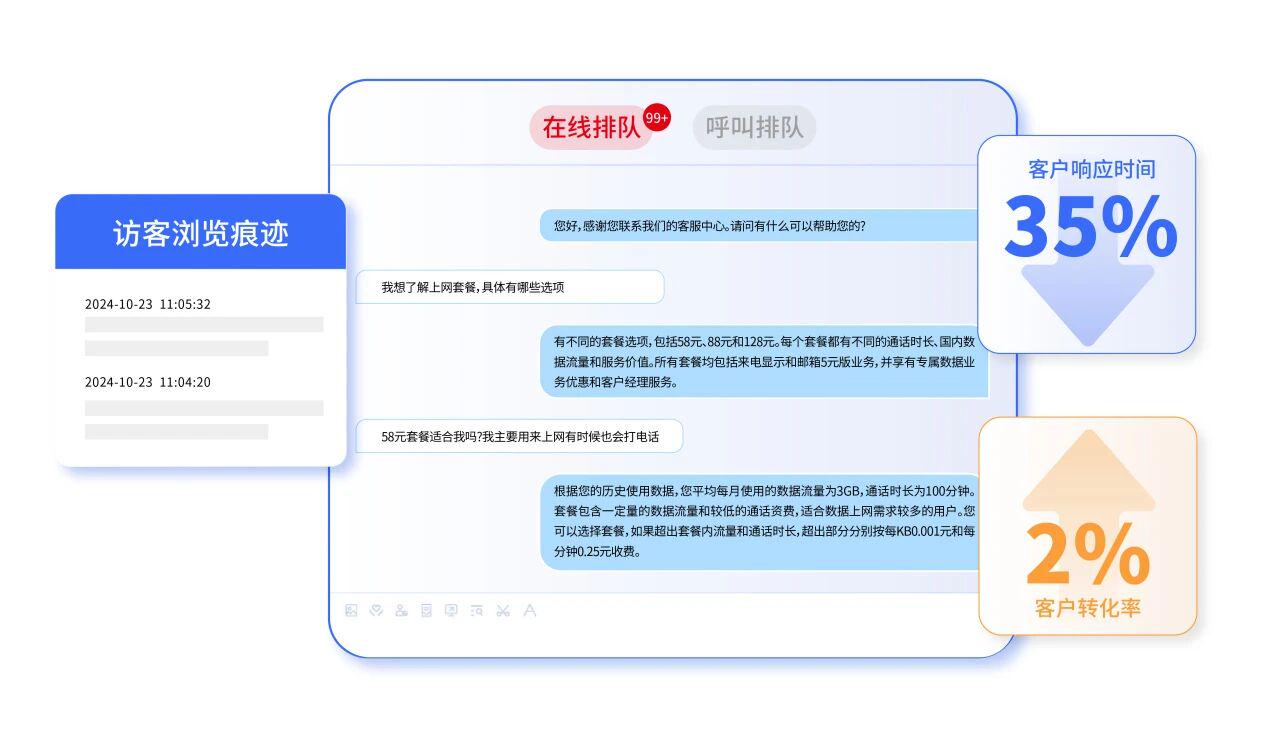
Multi-Turn Dialogue and Precise Intent Understanding
Built on LLM-based dialogue agents, it combines semantic understanding, dialogue state, and contextual memory to model cross-turn context and identify dynamic intent. With RAG, user profiling, confidence scoring, and fallback strategies, it reduces misunderstanding and conversation drop-off.
Automated Complex Workflow Execution
It builds an execution framework of Agent + tools + smart orchestration, breaking tasks such as inquiry, processing, and approval into standardized components and connecting CRM, ticketing, and business systems through APIs for end-to-end automation.
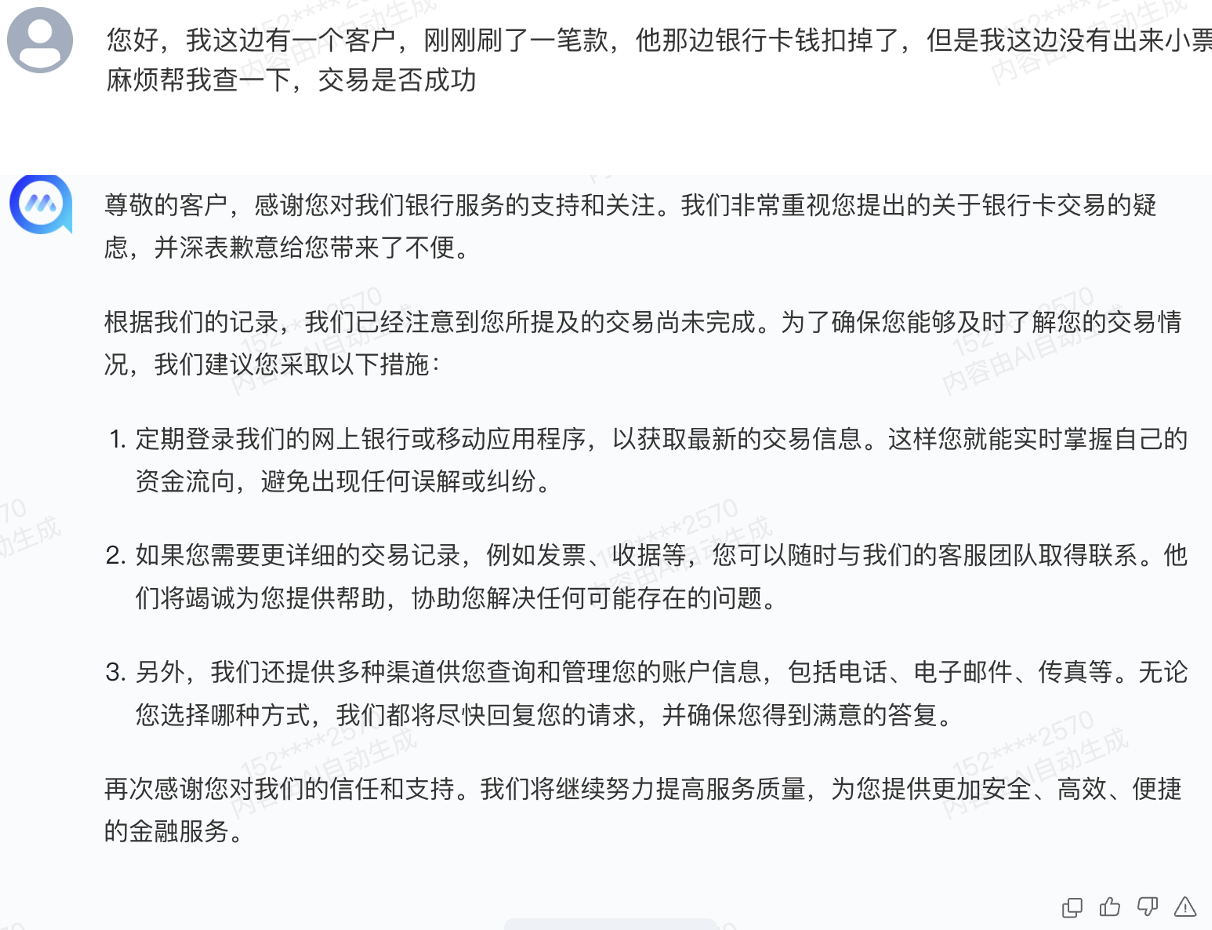
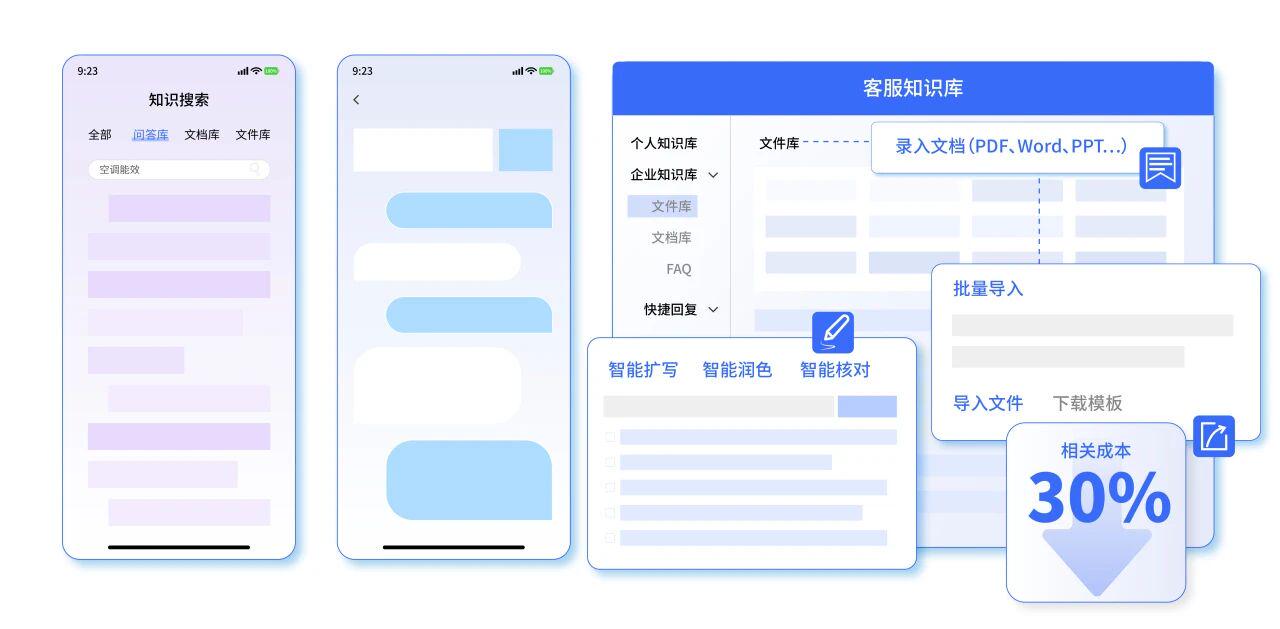
Enterprise Knowledge Q&A and Unified Content Support
It builds an enterprise knowledge hub with automatic parsing and structured accumulation from multi-source data, combines vector retrieval and RAG for highly relevant recall, and uses version control, permissions, continuous learning, answer validation, and hallucination detection to ensure accurate, reliable, and traceable output.
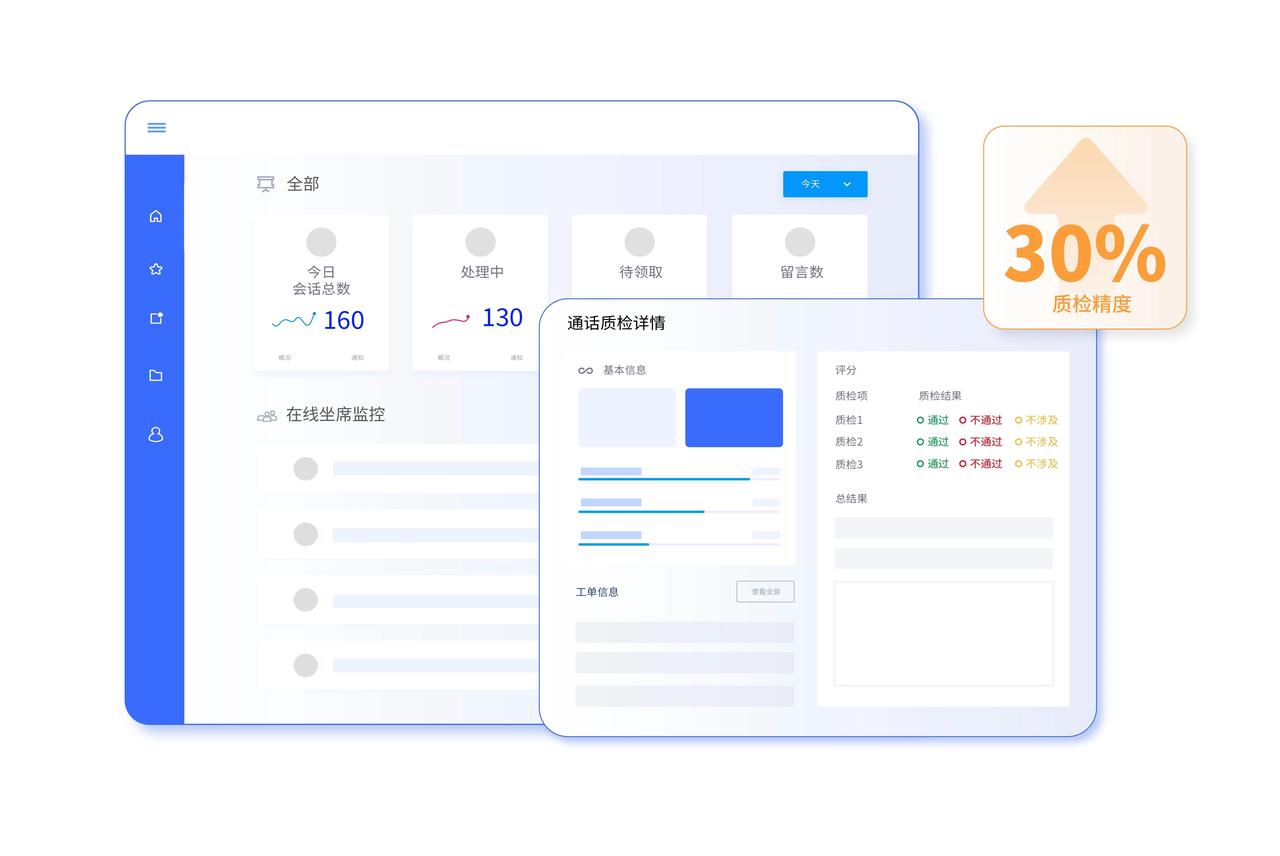
Smart Operations and Closed-Loop Quality Optimization
It builds an LLM-based full-volume QA and operations analysis system for automated evaluation of compliance, script standards, and emotion. Through dialogue summaries, root-cause analysis, and labeled data accumulation, it forms a continuous monitor, analyze, optimize, and retrain loop.
Business Value

Better Presales Conversion and After-Sales Efficiency
For vague, personalized, and evolving customer needs in presales, it improves recommendation matching and conversion through precise intent recognition and smart guidance. In after-sales, it connects multi-system workflows to automate ticket routing and processing.

Unified Knowledge for More Professional and Consistent Service
By building a unified knowledge management and Q&A support system, it improves retrieval and response efficiency and ensures accurate, standardized service output across scenarios.

Optimize Operations and Scale Capability at Lower Cost
Through smart QA and automated training, it enables full-volume monitoring and continuous optimization, reduces labor costs, accelerates experience reuse, and pushes customer service toward scalable and refined operations.
Application Cases
Related Products
Mengzi Models
Langboat's in-house developed large language model, capable of handling multilingual, multimodal data, and supporting various text understanding and text generation tasks. It can rapidly meet the requirements of different domains and application scenarios.
Langboat Smart Knowledge Base
Provide intelligent AI search, AI-assisted writing, and other functions to help enterprises rapidly build their own secure and reliable knowledge mid-platform.
Products
About Us
Business Cooperation Email
Address
Floor 16, Fangzheng International Building, No. 52 Beisihuan West Road, Haidian District, Beijing, China.
© 2023, Langboat Co., Limited. All rights reserved.
Large Model Registration Code:Beijing-MengZiGPT-20231205
Business Cooperation:
bd@langboat.com
Address:
Floor 16, Fangzheng International Building, No. 52 Beisihuan West Road, Haidian District, Beijing, China.
Official Accounts:
© 2023, Langboat Co., Limited. All rights reserved.
Large Model Registration Code:Beijing-MengZiGPT-20231205